Wire ·
DoJ: Lazarus used EIP-7702 to seize 32 Binance wallets
A DOJ forfeiture complaint says hackers used Ethereum's EIP-7702 standard to hijack 32 of Binance's own hot wallets in the October 29 heist, part of a case covering $6 billion across 36 addresses.
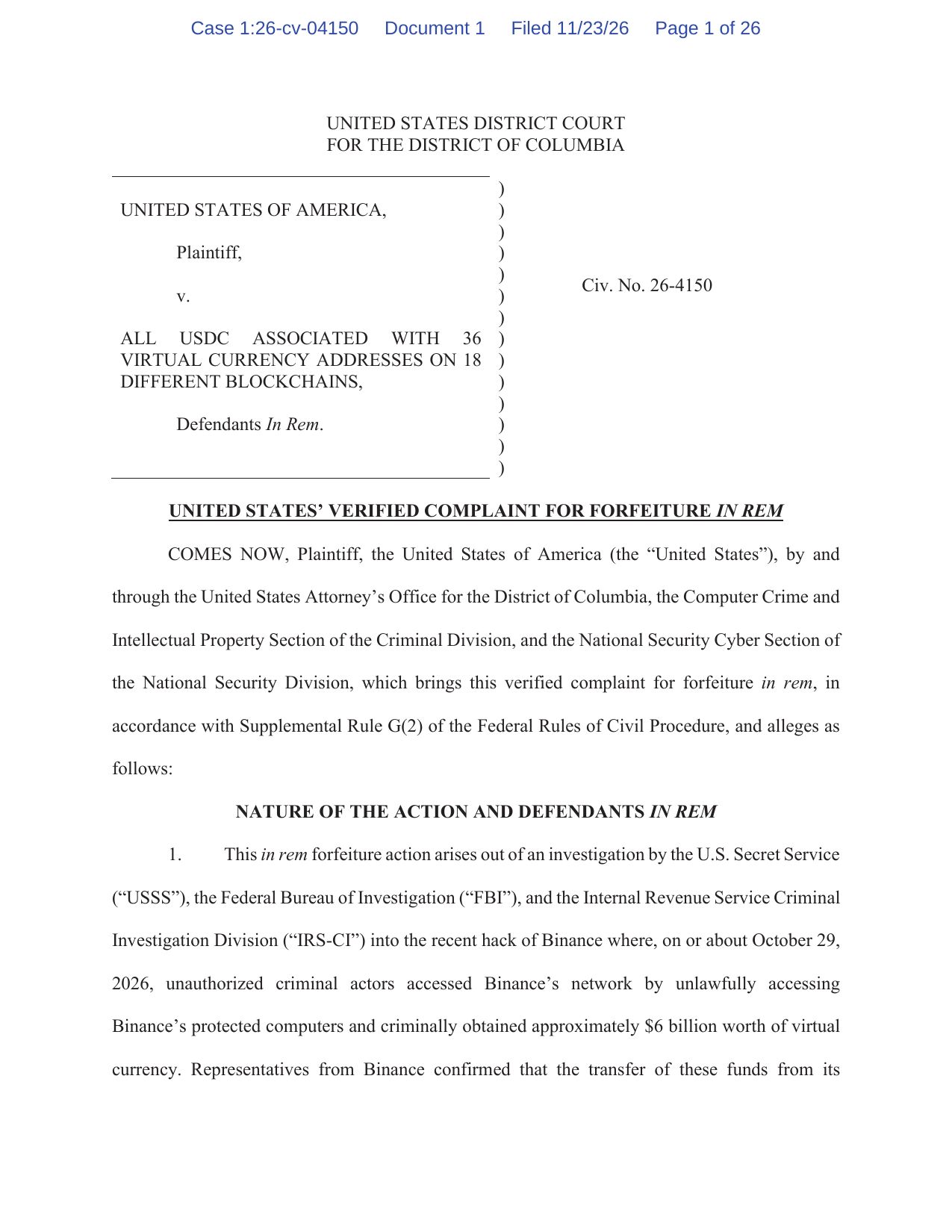
The Department of Justice filed a civil forfeiture complaint in federal court on November 23, 2026, seeking the USDC tied to 36 virtual currency addresses across 18 blockchains linked to the October 29 hack of Binance.DoJ: civil forfeiture complaint over Binance hack USDC, EIP-7702 wallet takeover (2026-11-23). The complaint says unauthorized actors accessed Binance’s network and obtained about $6 billion worth of virtual currency. Binance told the government the hackers used malware to exploit EIP-7702, Ethereum’s wallet-upgrade standard, to take control of Binance’s hot wallets and automatically sweep out incoming funds through a “sweeper” contract.
The filing is a forfeiture complaint, not a recovery of the stolen funds: Circle says it cannot transfer the frozen USDC itself and has only agreed to mint an equivalent amount of new USDC once a court orders the forfeiture.
According to the complaint, the intrusion began when a Binance employee was contacted by a purported job recruiter, agreed to a job interview, and was told to download software that carried the malware, which installed the EIP-7702 exploit on the device. The complaint names 36 addresses in all; 32 of them, lettered E through JJ, were Binance’s own platform wallets, seized the same way and blocklisted by Circle the day of the heist. At 20:41 UTC that day, the hackers moved about $780 million in USDC to a single Ethereum address, then another $43 million to the same address eighteen minutes later.
A federal court had already frozen the named addresses with a temporary restraining order on November 12, before the complaint was filed. Federal investigators say the heist matches the tactics they have tied to North Korea’s Lazarus Group/APT38 in other virtual currency thefts. The case now proceeds toward a forfeiture order, which Circle is waiting on before it issues the replacement USDC.
Sources
Disclosure
This article was drafted by S-Curve Desk, an AI system, from the sources above. Boaz Sobrado reviewed it before publication. Errors: the corrections log, or write to us.